
Sod installation services in Olathe involve much more than placing green rolls across bare ground. A successful installation starts with understanding the site, correcting the grade, preparing the soil, and planning how the new grass will be watered. Homeowners often ask how the process works because sod seems almost instant from the curb. The lawn may look finished on installation day, but the roots still need time and consistent care before the surface can handle ordinary use.
The process begins with a site evaluation
A contractor should first ask why the lawn is being replaced. Construction damage, poor drainage, erosion, shade, pet wear, and irrigation problems call for different solutions. The crew also needs to measure the area, check access, locate obstacles, and look at how water moves through the property. If the existing turf is failing, sod replacement in Olathe should address the cause rather than cover it. Standing water may require grading or drainage work. Compacted ground may need to be loosened. A deeply shaded area may need a different grass choice or a landscape solution that does not rely on turf.
This evaluation is a good time to discuss sprinkler coverage. Every section of new sod needs reliable moisture, including narrow strips beside pavement and corners that fixed sprinkler heads sometimes miss. A careful inspection may also reveal that only part of the yard needs new sod. Keeping healthy turf where possible can reduce disruption, but the transition between old and new grass should be planned for a consistent appearance.
What do sod installation services in Olathe include?
The exact scope varies, so the written proposal matters. A complete project may include removing old turf and weeds, hauling away debris, adding or amending soil, correcting the grade, preparing a smooth surface, installing sod, and cleaning the work area. Care instructions should be part of the handoff. A qualified sod installation company in Olathe should describe the grass being installed and why it fits the property. Sun exposure, expected traffic, irrigation, and maintenance preferences all matter. The contractor should also explain how much sod is required and whether tight access or unusual slopes affect the work. Ask what is excluded as well. Irrigation repair, major drainage changes, tree work, or extensive soil delivery may be separate services. Clear expectations keep a straightforward lawn project from turning into a string of surprises.
Old turf is removed and the grade is prepared
Crews typically remove failing vegetation so the sod can contact the soil directly. Any leftover roots, rocks, and construction debris can create bumps or interfere with establishment. Once the area is clear, the contractor can see low spots and uneven transitions that were hidden by the old lawn. Grading shapes the final surface and controls where water travels. The lawn should meet sidewalks, driveways, patios, and planting beds cleanly without leaving the sod too high or creating a place where runoff collects. Soil preparation also gives young roots a workable layer to enter. On business properties, commercial sod installers in Olathe may need to coordinate this work around entrances, parking, deliveries, and public access. The project can move efficiently when staging and access are decided before materials arrive.
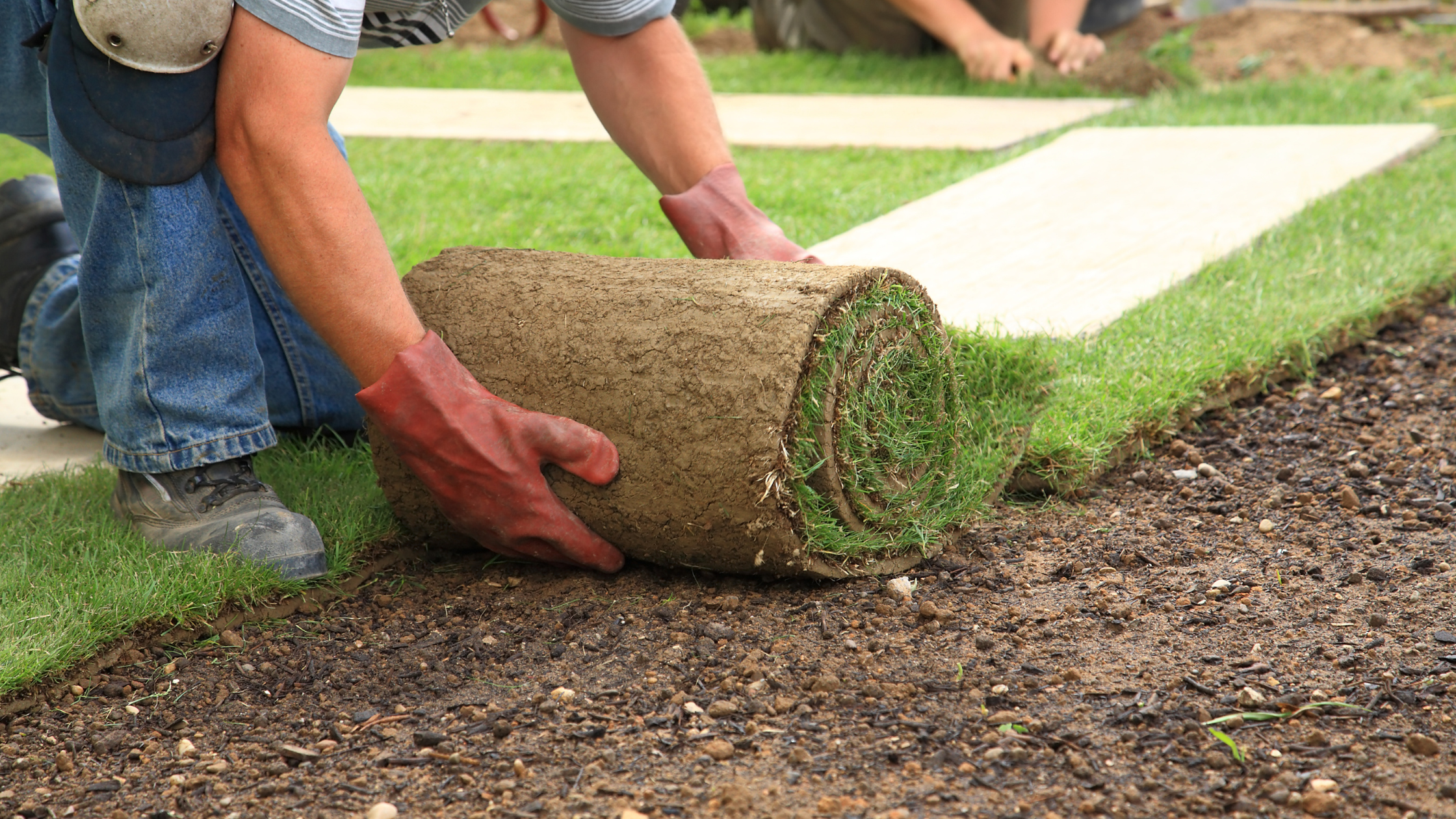
Fresh sod is placed tightly and watered promptly
Sod is perishable. Once delivered, it should be installed without unnecessary delay, especially during warm weather. Crews generally begin along a straight edge and stagger the seams so the lawn does not develop long, continuous joints. Pieces are fitted closely around curves, sprinkler heads, and landscape features. Good contact between roots and prepared soil is essential. Air pockets and folded edges can dry quickly. The crew should also avoid tiny scraps in exposed areas because they lose moisture faster than full pieces. Watering begins promptly as installation progresses or immediately after the area is complete. This early soaking helps the sod and prepared soil stay moist together. Reliable sod installation services in Olathe should leave specific guidance based on the season and current site conditions, not a vague instruction to water often.
The first few weeks require steady attention
New sod needs frequent observation. Hot, windy days may dry edges faster, while cool or rainy weather changes the amount of irrigation required. Lift a corner gently when instructed to check moisture below the sod. The goal is consistent moisture without keeping the site swampy. Limit foot traffic until roots begin anchoring the turf. Pets, children, and repeated trips across the same route can shift pieces or create depressions in soft soil. The first mowing should happen only after the sod resists lifting and the surface is firm enough for the mower.
Companies experienced with sod replacement in Overland Park face similar Kansas weather swings, so regional knowledge can be helpful when establishing a watering schedule. Still, homeowners should adjust for rainfall and watch the actual lawn rather than follow the calendar blindly.
A clear handoff protects the investment
Before the crew leaves, walk the finished area and ask about seams, edges, watering coverage, mowing height, and any spots that need extra attention. Keep the care instructions somewhere accessible. It is easier to ask a question early than to wait until a dry patch has spread. A sod installation company in Overland Park may use a similar process, but every property still requires its own preparation and care plan. Soil, sunlight, slope, and irrigation can change within a short drive, and even within different parts of one yard.
Professional sod installation services in Olathe should leave you with more than a green surface. You should understand what was done below the grass, how to care for it during establishment, and when the lawn can return to normal use. That knowledge is what helps an installation become a healthy, lasting yard.
FAQs
How long does professional sod installation take?
It depends on the lawn size, access, removal work, grading needs, and weather. A small, prepared yard may move quickly, while a larger property with drainage or soil issues takes longer. The contractor should separate installation time from the rooting period afterward.
When can new sod be mowed for the first time?
Wait until the roots have begun attaching and the surface is firm enough that the mower will not shift the sod or leave ruts. Use a sharp blade and avoid removing more than one-third of the grass height in the first cut.
Do sod installation services in Olathe include watering?
The crew may water during installation, but ongoing irrigation is normally the property owner's responsibility. Confirm the handoff before work begins, test the irrigation system, and ask for a schedule tailored to the weather, soil, and grass type.

Reach out to us online at Back to Nature Lawn and Landscape or give us a call at (913) 461-0863.
We’re not here to upsell you. We’re here to help you finally get your yard under control. Maybe the grass isn’t growing. Maybe the weeds are winning. Maybe your backyard just feels like work instead of a place to enjoy. That’s what we fix.
We build healthy lawns and low-stress landscapes. Sod, seeding, clean-ups, mulch, mowing, whatever it takes to get things looking right and staying that way. No shortcuts. No nonsense. Just solid work from a team that actually calls you back.
Let’s get your yard where it needs to be.